Mercosur's Role in Paraguay's Emerging Global Trade
Paraguay, a key player in Mercosur, is strategizing to leverage its position to attract global trade opportunities. Analysts suggest the country's agricultural prowess and energy surplus could be pivotal in the world trade scenario.
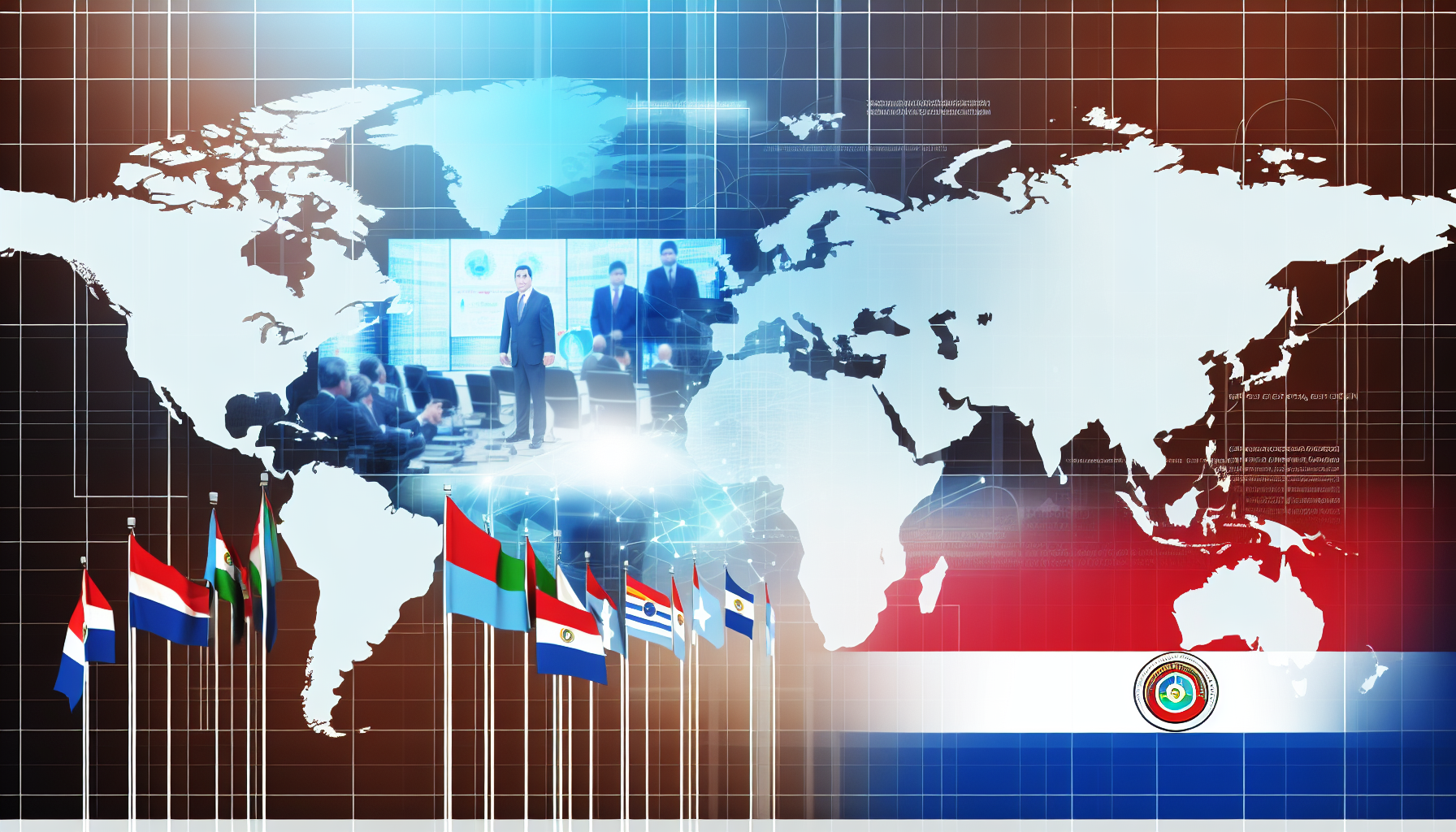
Paraguay, a prominent member of Mercosur, is poised to play a bigger role in global trade, leveraging its strategic location, agricultural strength, and energy surplus. Economists suggest that Paraguay's unique positioning in the South American trade bloc could prove instrumental in opening up new trade corridors.
Mercosur, the Southern Common Market, is a South American trade bloc established in 1991. Its full members include Argentina, Brazil, Paraguay, and Uruguay, with numerous associate and observer countries. The bloc represents a significant portion of the world's economy, providing a platform for Paraguay to engage with a range of global partners.
Analysts believe that Paraguay's strategic location in the heart of South America offers a distinct advantage in terms of logistics and trade connectivity. The country's well-developed river transport system, coupled with its membership in Mercosur, can facilitate efficient trade routes across the continent and beyond.
Moreover, Paraguay's robust agricultural sector, primarily soybean and beef, is a significant contributor to the country's economy. With the ever-increasing global demand for food, Paraguay's role as a leading agricultural exporter could potentially bolster its standing in international trade.
Additionally, Paraguay is home to the world's largest operational hydroelectric power plant, Itaipu Binacional, shared with Brazil. The surplus energy produced by the country is an untapped resource that could be harnessed for industrial development and export.
However, challenges remain in terms of infrastructure development, regulation, and international perception. Successful navigation of these issues could lead to a more outward-facing Paraguay, playing an increasingly influential role in global trade.
As Mercosur seeks to negotiate trade agreements with other regions, Paraguay's input and cooperation are vital. A more globally integrated Paraguay could not only boost the country's economy but also contribute to the strengthening of Mercosur as a whole. Therefore, the decisions made in Asunción have implications for the entire region.
Experts suggest that Paraguay, and by extension Mercosur, could stand to gain significantly from strategic trade diversification. The country's potential in the global arena is immense, and the right steps could position Paraguay as a key player in international trade.